Crafting Excellence: Jay’s Journey with Leather and Morris Chairs

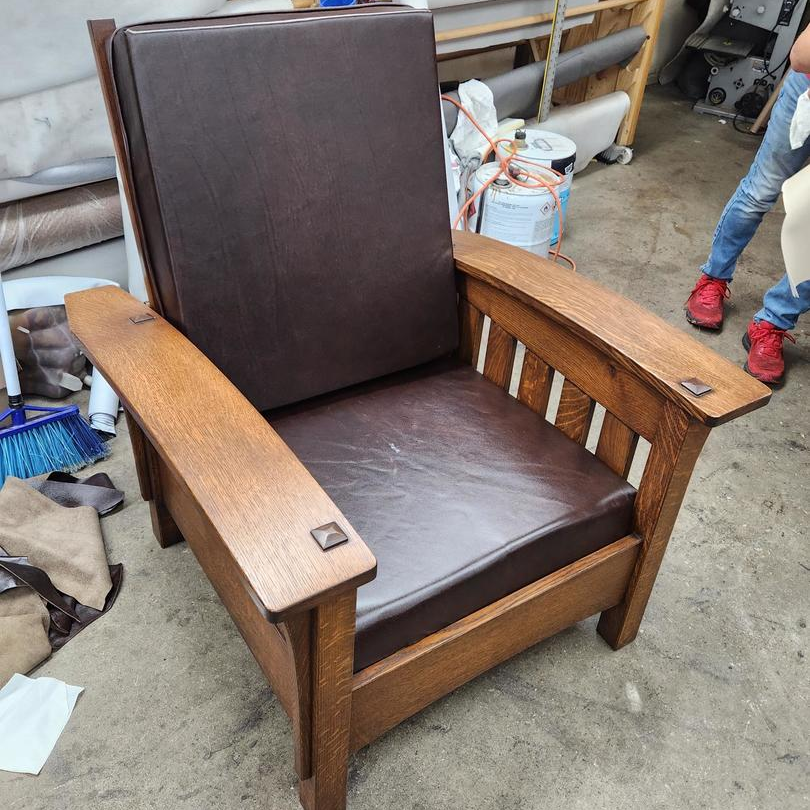
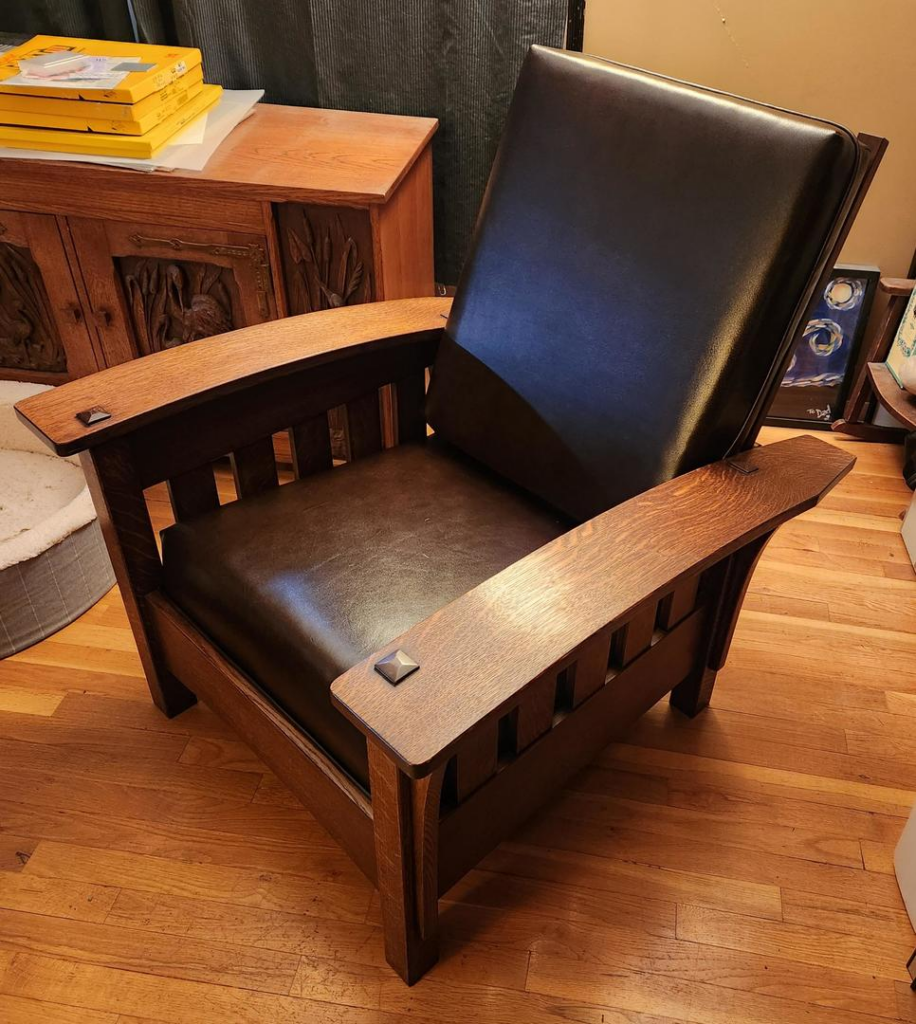
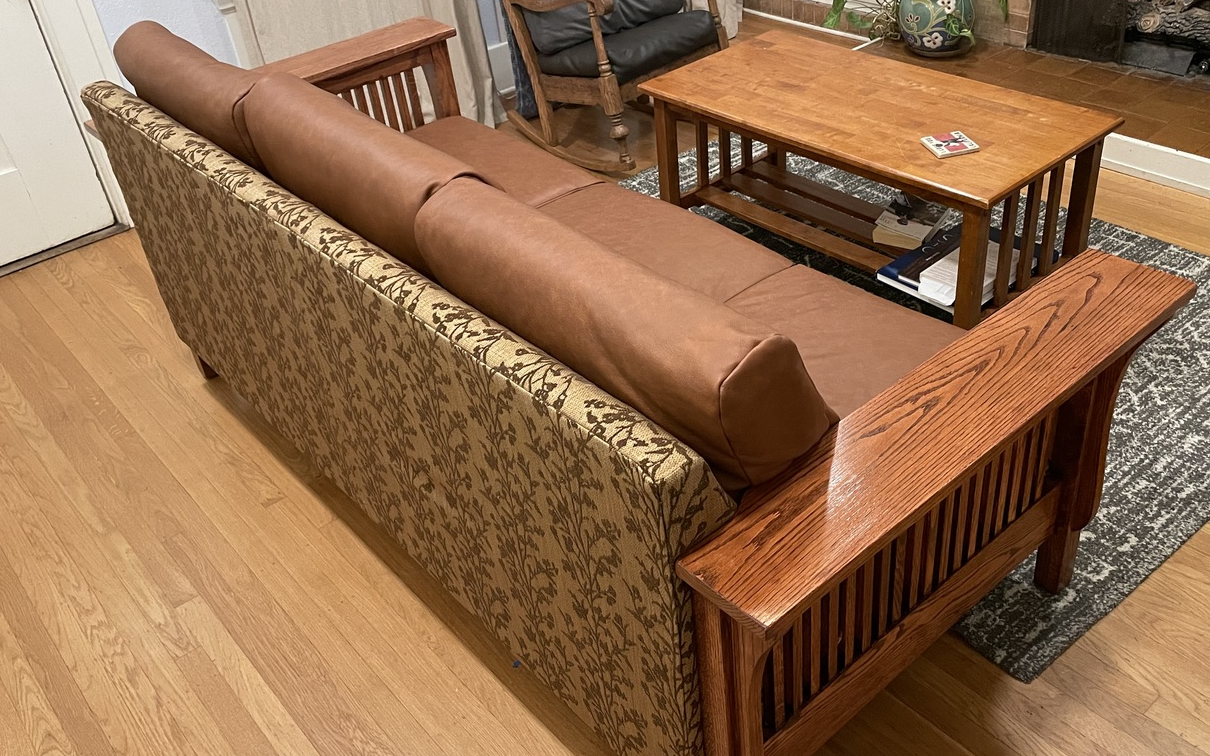
Jay, a dedicated craftsman with a penchant for woodworking excellence, embarked on a journey to create a Bowed Arm Morris Chair a few years back. Seeking the finest materials, Jay turned to the Leather Hide Store for their quality leather, guided by their helpful measurement recommendations.

Upon completing the chair, Jay enlisted the expertise of an upholsterer whose meticulous workmanship resulted in a chair of impeccable quality. Delighted with the outcome, the upholsterer noted there was enough leather left for another chair, expressing interest in purchasing it should Jay decide to craft another.

Motivated by this success and eager to refine his skills, Jay enrolled in a highly anticipated chair-making class offered annually over two weeks. Determined to expand his craft, Jay built a second Bowed Arm Morris Chair. For this endeavor, Jay chose K1195 French Press leather from the Leather Hide Store, a testament to his commitment to using only the best materials for his projects.

From Cabinets to Comfort

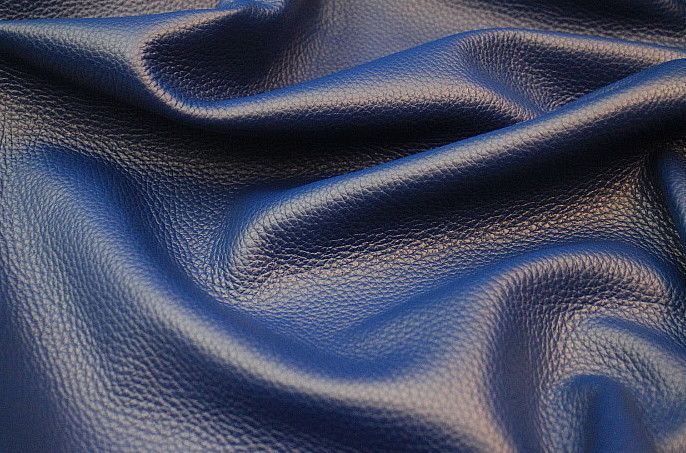
Trevor, a master cabinetmaker by apprenticeship venturing into upholstery for the first time, discovered Leather Hide Store online. Impressed by their user-friendly interface and diverse leather selection, he chose Detroit Cobalt leather for its bold yet refined appeal.

Navigating challenges familiar to new endeavors, Trevor approached leather with caution, guided by YouTube tutorials and meticulous planning. His efforts resulted in beautifully upholstered side chairs, enhancing his kitchen with a vibrant modern touch against walnut and hickory.

Reflecting on his experience, Trevor advises perseverance and practice with leather, emphasizing its unique qualities and room for creative exploration. Looking forward, he plans to apply lessons learned to future projects, grateful for Leather Hide Store's support and efficient service throughout his journey.

A “strapping” Project!

Howard approached us with a unique challenge: crafting four new leather straps to serve as arms for two leather chairs.

Each strap required two layers of tapered leather with double pigskin liners—a meticulous task that Howard approached with precision. To ensure the straps were impeccably stitched, he consulted a local shoe repair shop known for its skilled artisans.

The outcome was outstanding. Howard's attention to detail and craftsmanship were evident in the flawless execution of the project. We were delighted to assist Howard in selecting the perfect Italian leather for his endeavor. Our commitment to quality ensured that Howard received materials that not only met but exceeded his expectations. Howard's project highlights the synergy of creativity, craftsmanship, and quality materials. We are honored to have played a part in his journey and look forward to inspiring more projects like his in the future.

Upholstery Success: Transforming Dining Chairs with The Leather Hide Store

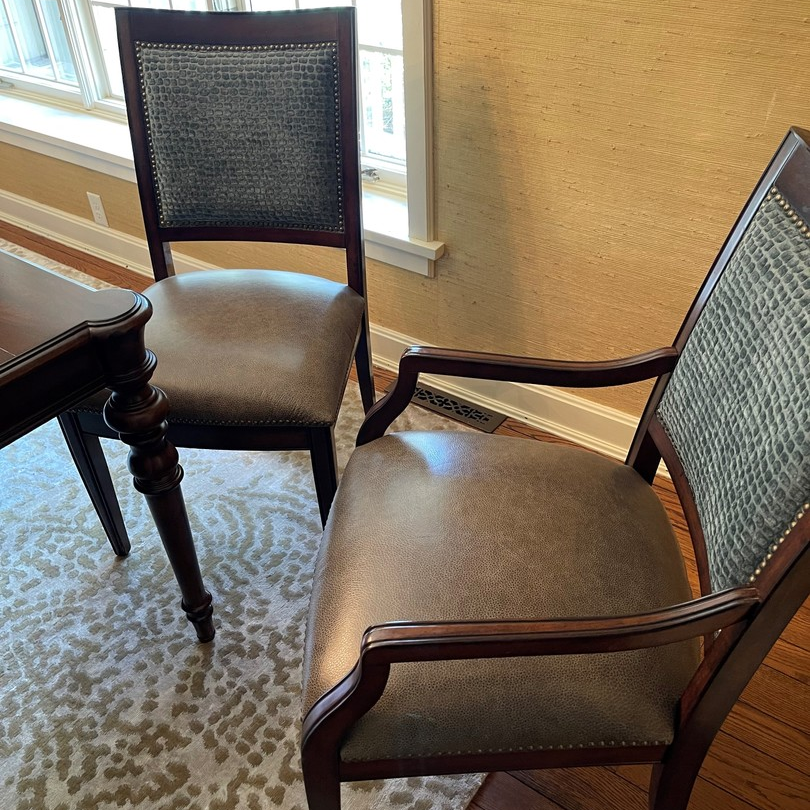
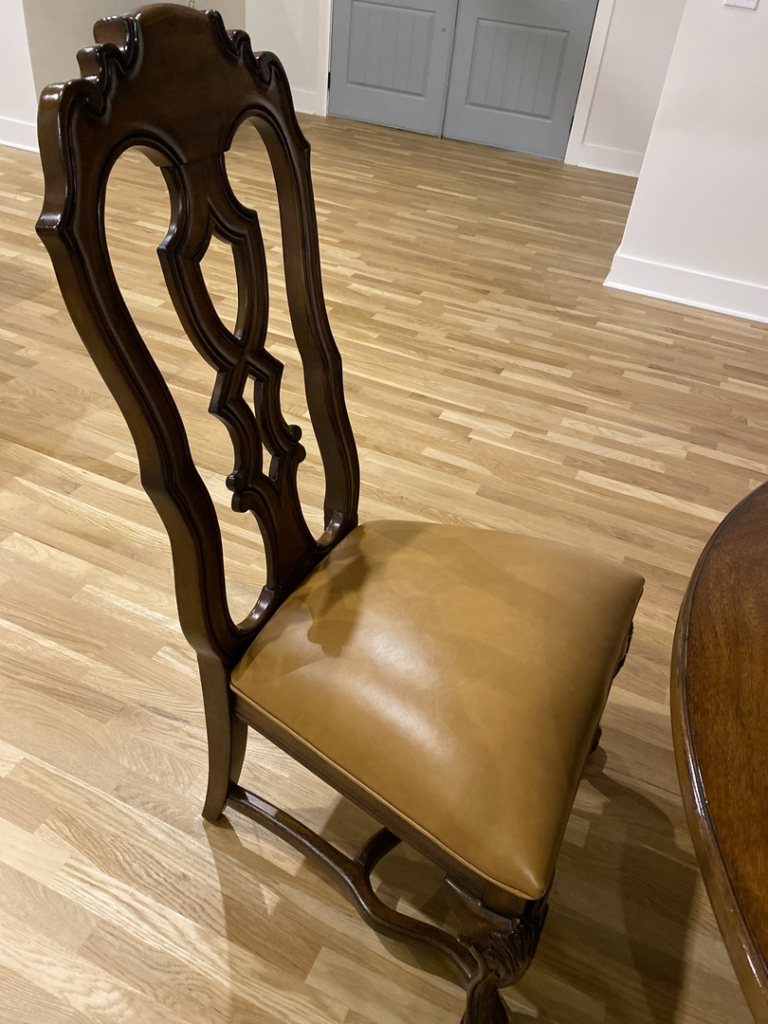
After discovering the Leather Hide Store, Kimberly was inspired to embark on her very first upholstery project: transforming ten dining room chairs into stunning, sophisticated pieces that would elevate her entire dining space. She chose our Naturals Great Smoky Mountain leather, a premium material known for its rich texture and authentic appeal. Carefully reviewing our sample collection, Kimberly selected the perfect shade to complement her decor, ensuring it aligned seamlessly with her vision.

When the hides arrived, she was thrilled to find they were precisely as described and depicted on our website, affirming our commitment to transparency and quality. With meticulous craftsmanship, Kimberly applied our upholstery-grade leather to her chairs, achieving a finished look that balanced both elegance and resilience. The durable, supple leather added a refined touch while promising long-lasting wear, making it ideal for everyday use in a busy household.

In addition to the quality of the leather itself, the experience was enhanced by our prompt shipping and secure, careful packaging, which ensured her materials arrived in pristine condition. This attention to detail underscored our dedication to customer satisfaction, helping make Kimberly’s first upholstery endeavor a rewarding and resounding success. The finished chairs now stand as a testament to her creativity and our commitment to excellence, leaving Kimberly both proud of her work and delighted with her choice of the Leather Hide Store.

Pet & Kid Resistant!

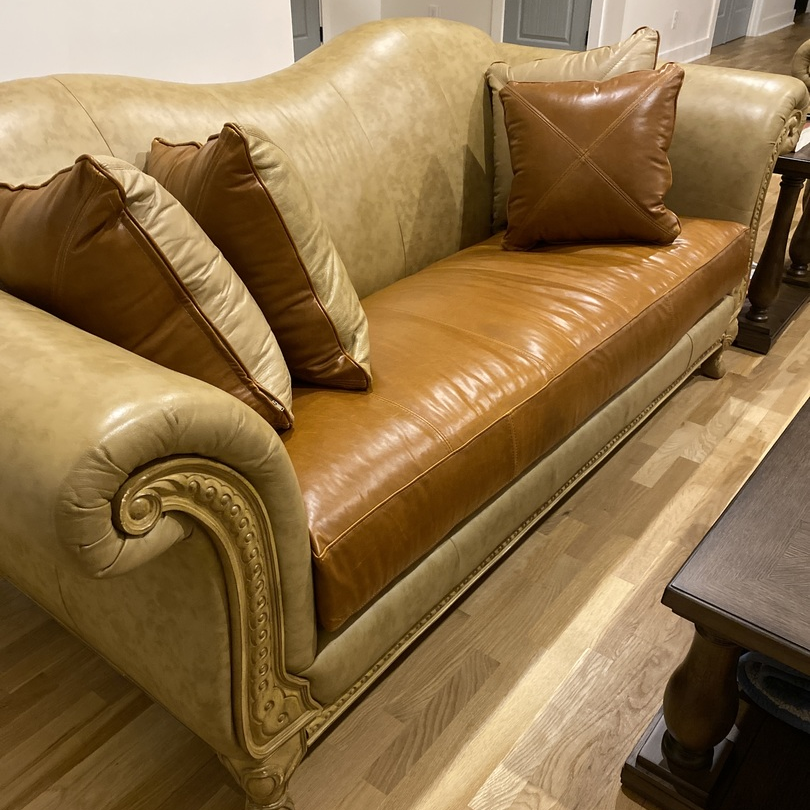
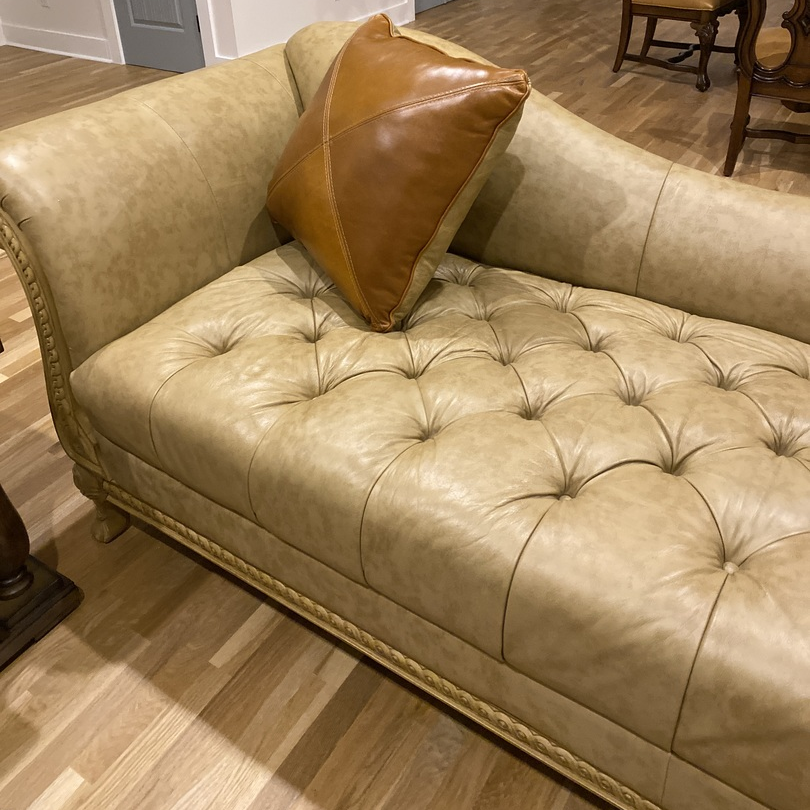
In the world of upholstery, every project tells a story. For Nathan, that story began with a vintage couch in need of a new life. Armed with a passion for quality and an eye for detail, Nathan chose our Dakota Fox to bring his vision to life. From the moment the leather was selected, it was clear this project would be special. Nathan's choice was not only about aesthetics but also about durability. He knew that with kids and pets in the house, resilience was key. To test the leather's durability, he subjected it to water for hours, only to find it completely unaffected.

But the story doesn't end with durability. Nathan discovered barely visible brands on the hides, a unique feature that added character to the leather. Instead of hiding these marks, he chose to highlight them, offering a glimpse into the leather's history for those who seek such authenticity.

Months have passed since the couch was upholstered, and the results speak for themselves. The vintage couch not only looks good but also feels and smells great, a testament to the quality of the leather and Nathan's meticulous craftsmanship.

For Nathan, this project was more than just a couch upholstery; it was a journey of transformation. And for those who appreciate the beauty of a well-crafted piece, it's a story that inspires.

4 Projects, 1 Customer!

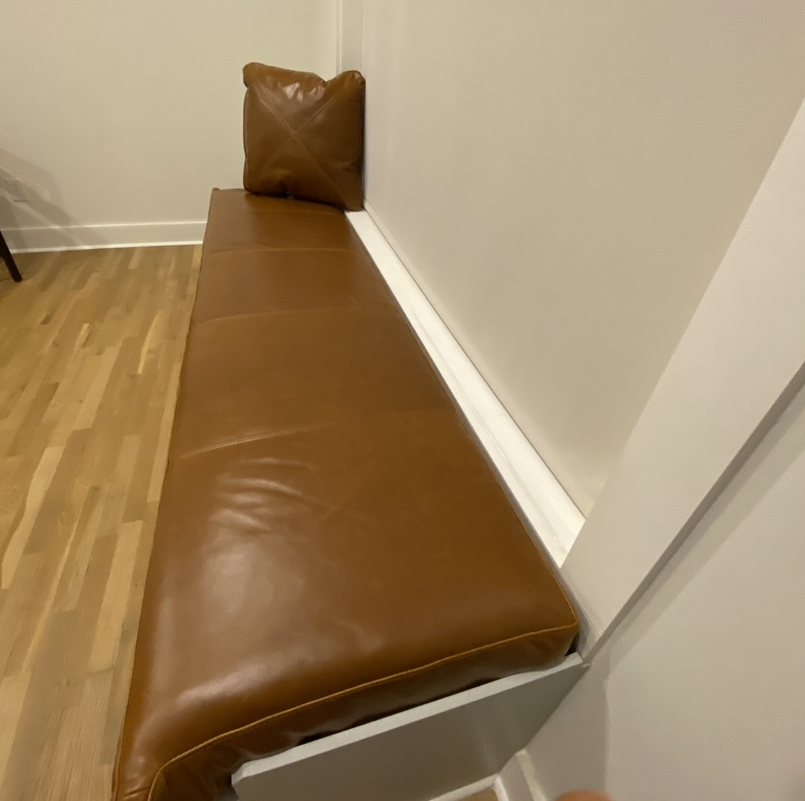
Veronica, a recently retired university administrator with a newfound appreciation for custom-made leather furniture, shared her experience with the Leather Hide Store. Introduced by a local upholster, Veronica was drawn to the store's exceptional reviews and comprehensive online resources. Despite being out of state, the store's customer service and expertise guided her to select the perfect leather for her project. Her refurbishment included reupholstering dining chairs, sofa cushions, throw pillows, and a window seat cushion cover.

Matching the leather was a challenge, but with the store's assistance, Veronica found the perfect match. The result? A collection that looks "like a million dollars," with Italian leather giving a high-end, modern look. Veronica's love for leather stems from its timeless appeal, low maintenance, and unique scent.

She advises others to plan carefully, invest in quality materials, and choose the right professionals. Next year, Veronica plans to add cowhide rugs to her collection. She credits the Leather Hide Store for their excellent products and unmatched customer service, describing her experience as among the top five best customer service encounters she's ever had.

Top 5 Machine Features for Sewing Leather

Leather_Sewing_Machine

By Willie Sandry
Willie Sandry is a Freelance Writer, blogger, and crafter who loves having the right tool for the job.  

This article is intended for educational purposes only.  Leather Hide Store does not recommend or endorse any leather sewing products.

You've chosen the perfect leather, consulted The Ultimate Reupholstery Guide, and you're ready to jump into your project.  Whether you are a seasoned leathercrafter, or new to the game, these tips for choosing the right sewing machine can help make your future projects a cinch.

Walking_Foot_Sewing_Machine

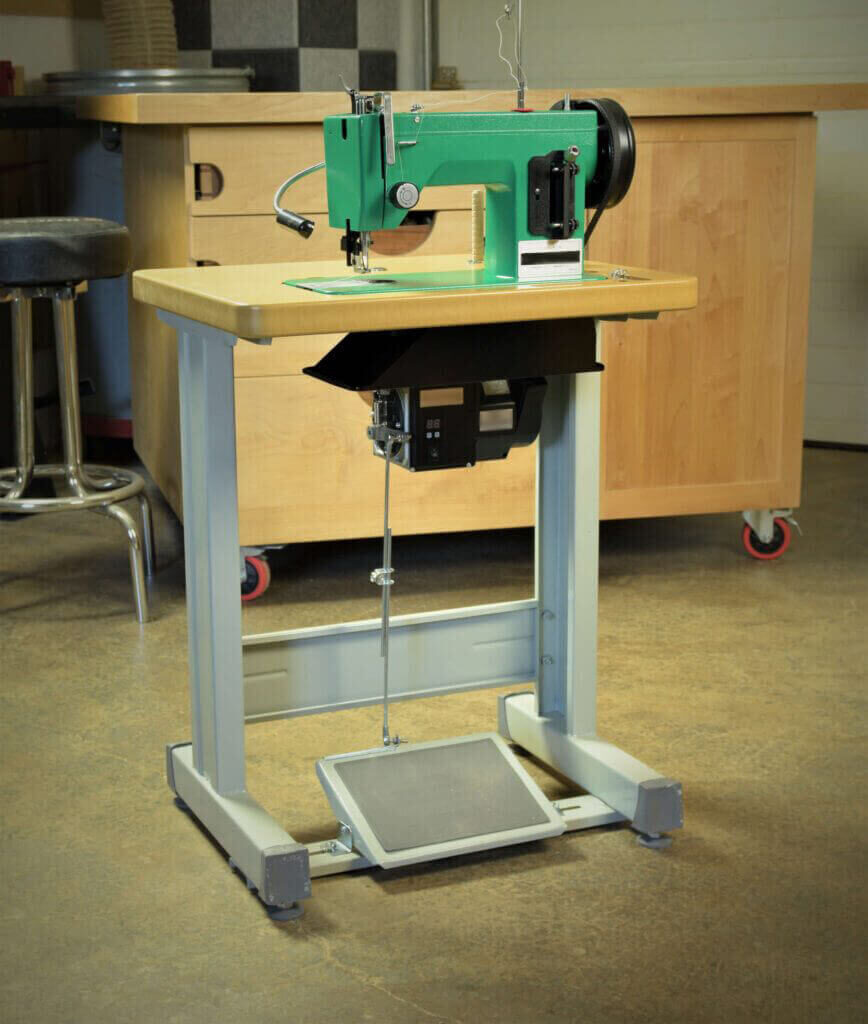
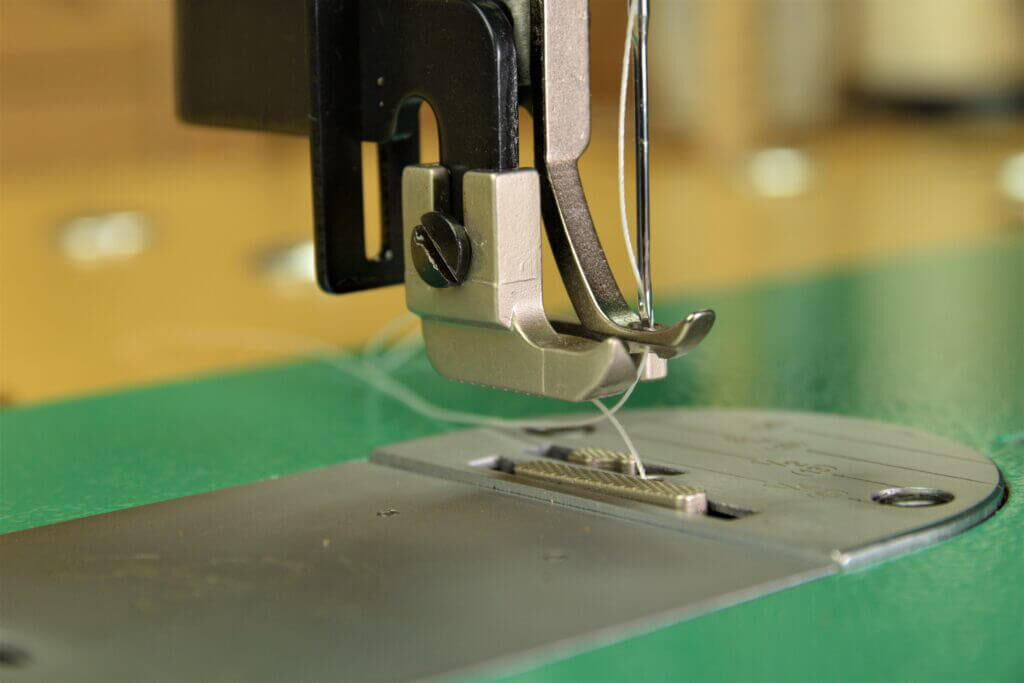
1. A Walking Foot.  Sewing leather opens up a number of avenues for crafters and upholstery enthusiasts. The problem is, a home sewing machine doesn’t have the right feeding mechanism to handle leather. A domestic machine is limited to drop feed, which means the material is pulled through by feed dogs alone. Not only can this fail to adequately feed the material through the machine (which causes shortened stitches) but it also tends to advance the layers unevenly (leading to uneven edges and wrinkles sewn into your project). The number one most important feature to sew leather is a walking foot mechanism. Let me be perfectly clear here… I’m not talking about a walking foot attachment for your home sewing machine. A true walking foot is an integral mechanism on a sewing machine that pulls material from both the top and bottom for even feeding. A walking foot has feed dogs below, and alternating presser feet above, to consistently feed leather without issues.


variable_speed_servo_motor

2. A Servo Motor. Let’s talk motors for a minute. A home sewing machine has a small variable speed motor that can handle light and medium-weight materials. The fact that it has variable speed is good, but it just doesn’t have the power for sewing leather.

A large industrial machine might have an old-fashioned clutch-style motor. You’ll know it’s a clutch motor if it hums whenever it’s powered on. While clutch motors are certainly powerful, they’ve fallen out of favor because they’re very difficult to control.

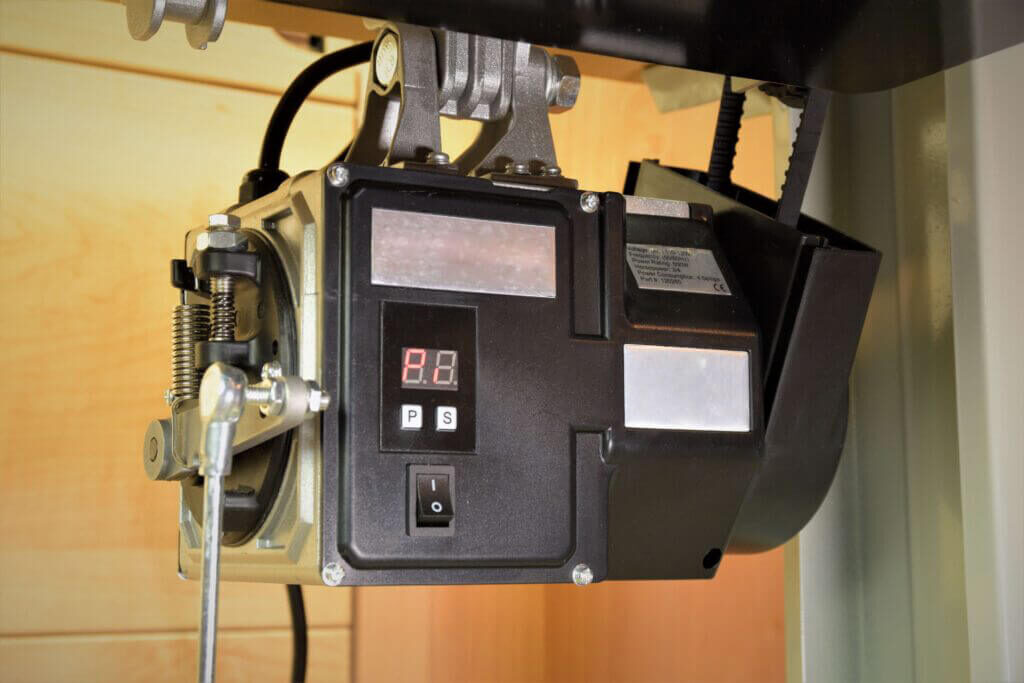
The solution to these problems is a variable speed servo motor. With plenty of punching power, while still being easy to control, a modern servo is a crowd favorite. Typically rated at 550 watts (3/4 h.p.) they won’t miss a beat with multiple layers of leather.


sewing_speed_reducer

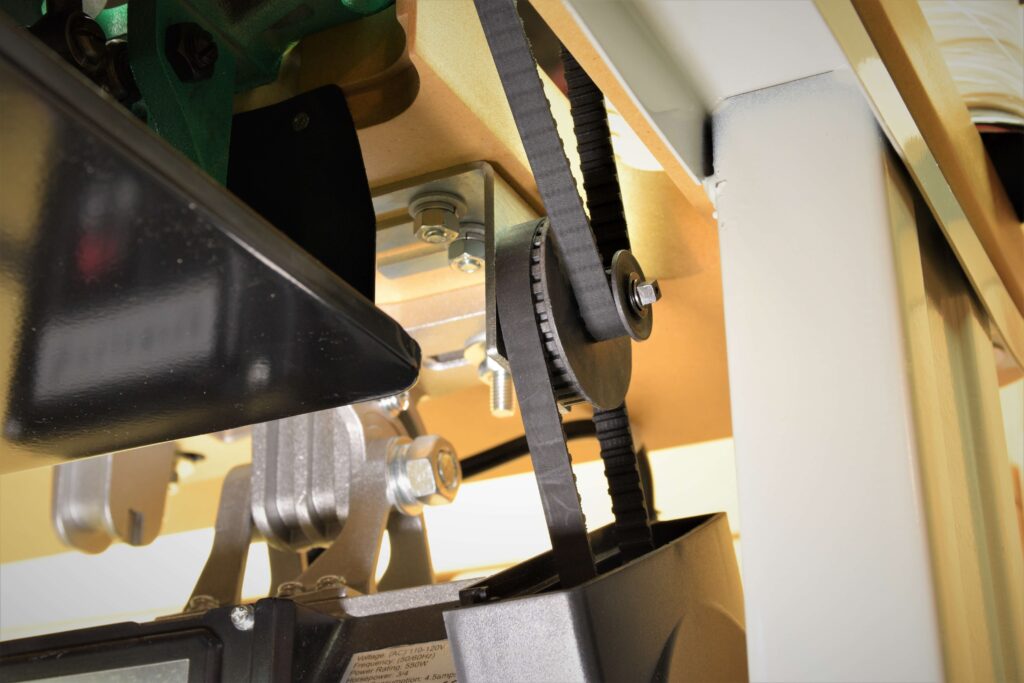
3. Speed Reducer. Have you ever tried to climb a hill on a BMX bike? You know the kind with only one gear? A speed reducer changes that experience to cruising in low gear without breaking a sweat. Basically, a speed reducer is a pair of pulleys and belts that further slow the sewing experience for the ultimate in control. The speed reducer acts as a torque multiplier, which is an added benefit when sewing thick leather. This is especially beneficial when walking over seams and transitions in leather.

Traditionally, a speed reducer was an add-on feature, but some manufacturers are now including it with sewing machine packages designed for leather work.


clearance_under_presser_foot

4. Clearance Under Presser Foot. Make sure the foot lifts high enough on your machine to allow clearance for thick assemblies. If the presser foot lifts nice and high, it will let you place and begin sewing leather with minimal effort. Luckily, leather compresses somewhat as it’s sewn, so as long as the layers slide under the presser foot, you should be good to go.


adjustable_stitch_length

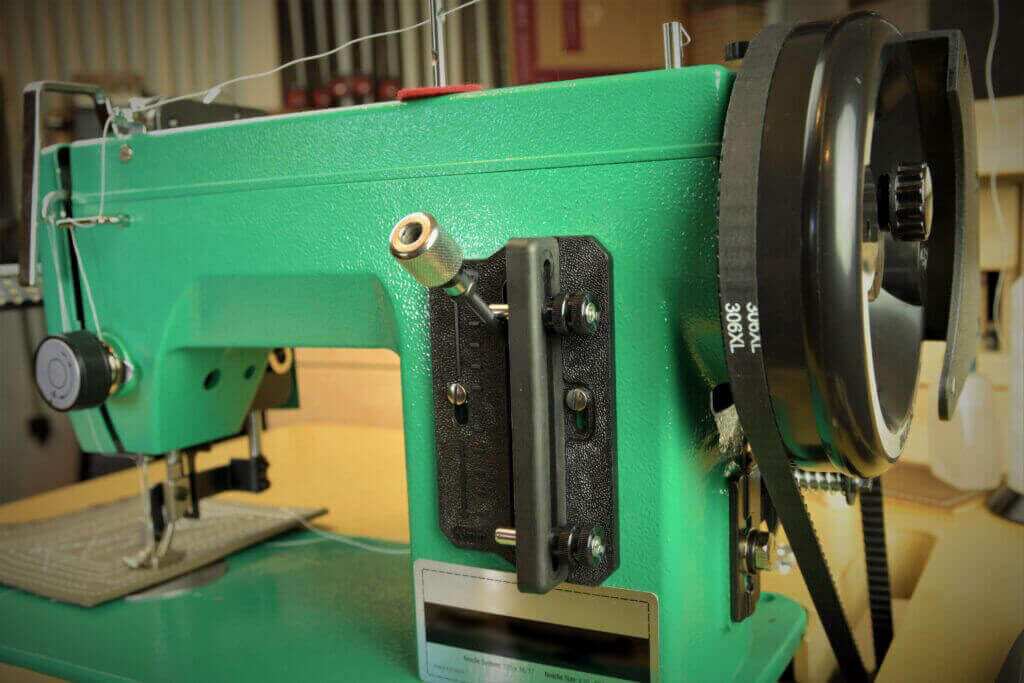
5. Ability to Equalize Forward and Reverse Stitch Length. Leatherworkers want the forward and reverse stitches to plunk right into the same holes for the cleanest possible look. Every time you terminate a visible seam, you’ll back-tack a few stitches to lock it in place. This is where equal forward and reverse stitch length is so important.

Some machines have this feature, however the adjustment process is so complicated you’d have to be a sewing machine mechanic to get it right. Recently, manufacturers have addressed this common complaint, and solved the issue with easy to adjust stitch length. Simply set forward and reverse stitch length equally and test on a scrap of leather. On this machine, the adjustment is made with two knurled thumbscrews on the front of the machine. The thumbscrews limit travel of the spring-loaded reverse lever as you sew.


precise_stitch_control

Precise Stitch-by-Stitch Control. The combination of a speed reducer and variable speed servo motor result in a relaxed experience behind the sewing machine. With the right equipment, sewing leather can be an incredibly rewarding pursuit.


simple_leather_coaster

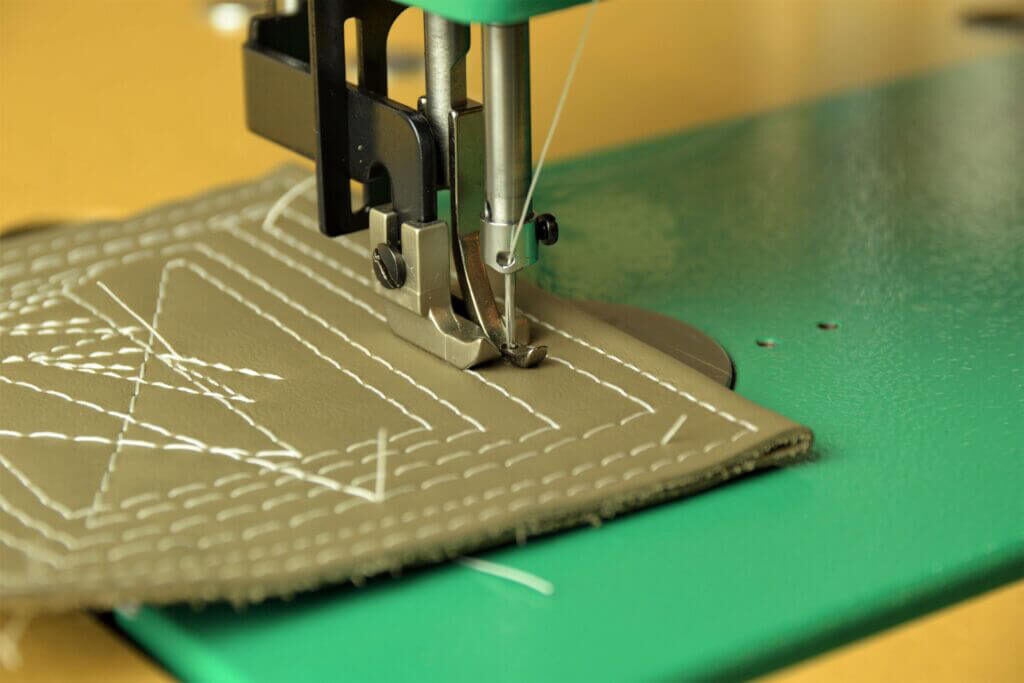
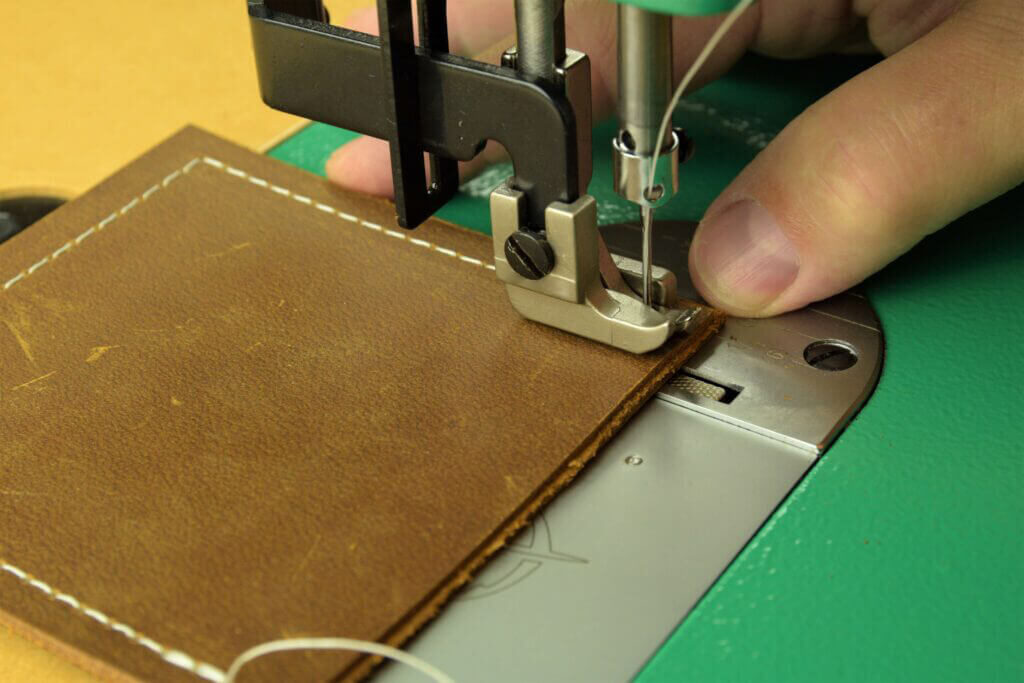
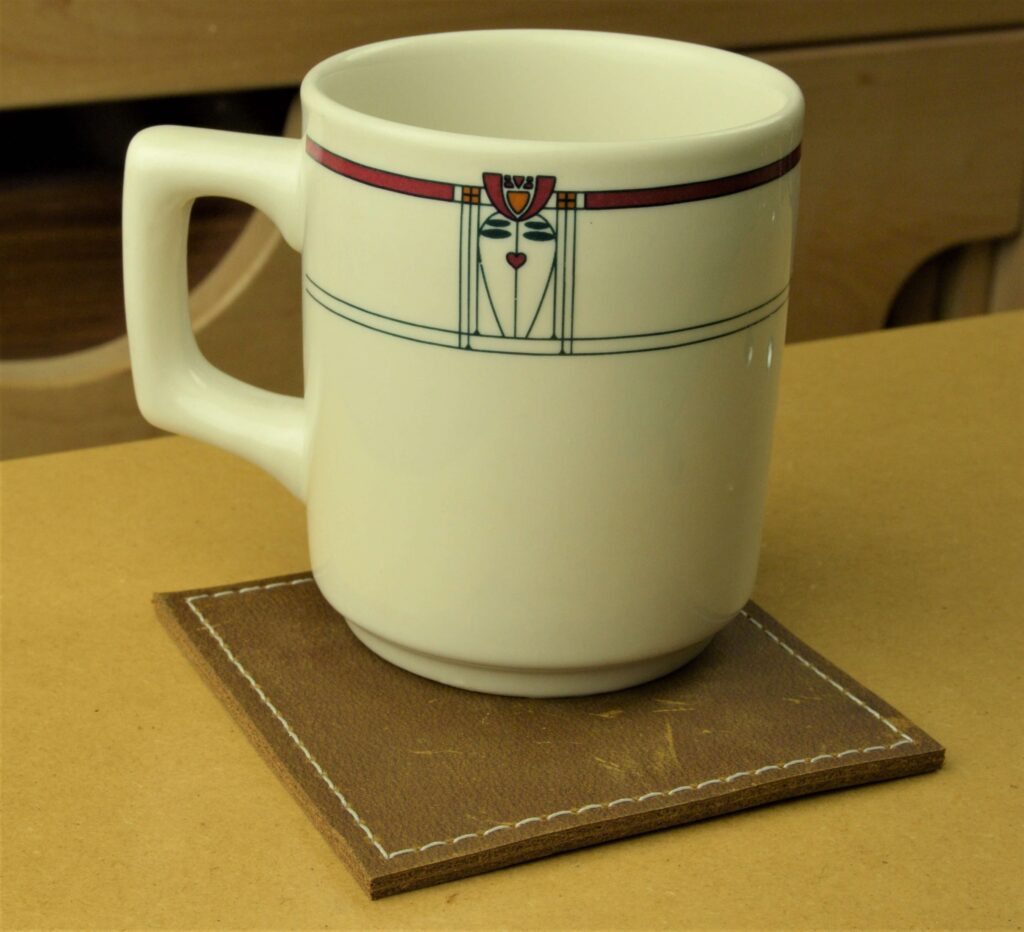
Start Simple. As with any new craft, start with beginner projects that let you experiment with the machine settings. Here, two layers of leather are sewn together with contrasting thread for a rustic drink coaster. Once you’re familiar with your new machine, go wild with more advanced and functional projects!

Check out Willie's Tutorial on Reupholstering a Bar Stool! 

How Much Leather Fabric Do I Need?

How much leather fabric do I need

What is Leather Fabric?

Leather fabric is popularly known in two ways: first, as genuine leather, most often used for furniture upholstery; and secondly, as a man-made textile that is designed to look like real leather (also called faux leather fabric).  In fact, the term itself is a contradiction as “leather” comes from the skin of an animal and “fabric” is a type of woven cloth.  For our purposes we will be discussing genuine leather from cowhides.


How is Leather Fabric Sold - In Feet, Not sheets!

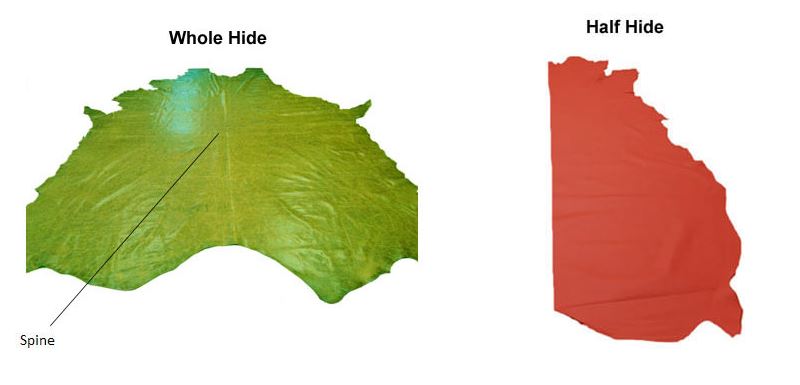
Leather skins or hides are measured and sold in square feet.  As a natural product, the leather hide takes the shape of the animal and is never found in sheets or rolls.  Specifically, the hide is laid out flat and the total surface area of the hide is measured in square feet.  A typical cowhide averages 50 square feet, but hide sizes vary depending on the breed of cow.  Therefore you will always buy leather as hides, not as leather sheets or rolls. See our Leather Cowhides: Shapes and Sizes to get a better idea of what your hide will look like.  


"My Upholsterer Says I Need 8 Yards?"

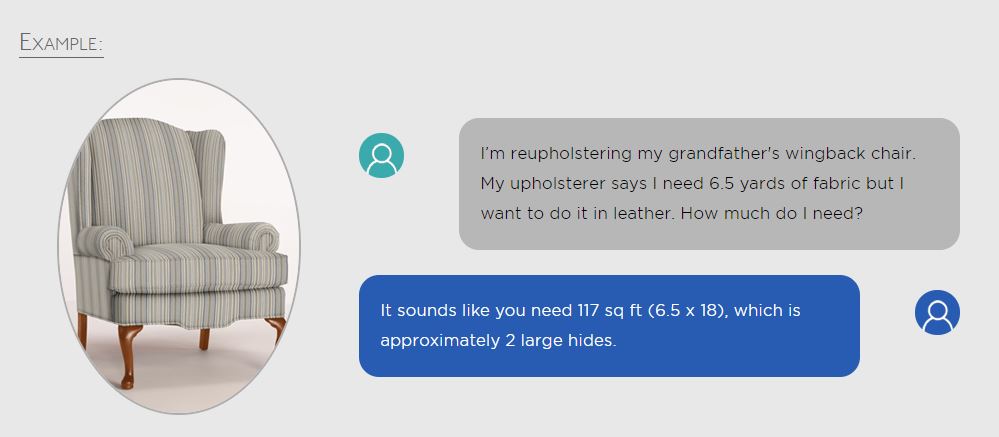
We get this call all the time and it goes something like “my upholsterer says I need 8 yards of leather to reupholster my chairs, how many hides should I buy?”  Upholsterers almost always quote projects in yards instead of square feet because fabric, which is sold in yards, is simply what they know best!  The estimate is given in fabric yards (36” long x 54” wide)  meaning you will need to convert to square feet.  Our Leather Fabric Calculator can do this for you but the general rule of thumb is 1 fabric yard = 18 square feet of leather.  Once you do the simple conversion to square feet, you can decide on the size and quantity of hides you will need to buy. 


Example of converting fabric yards to square feet of leather.


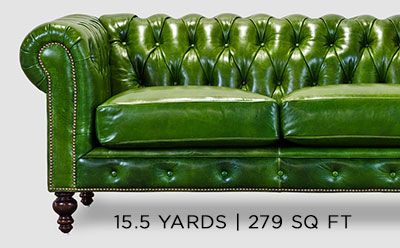
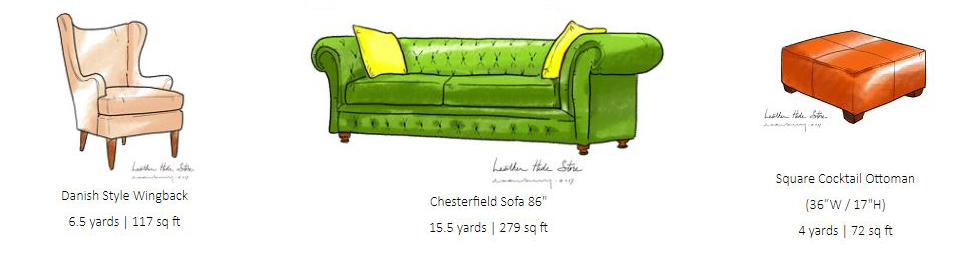
Another resource is our Furniture Reupholstery Guide that includes nearly 200 pieces of furniture,  with an estimate of the square feet of leather you will need (see examples below).  Working on an automotive upholstery project?  Be sure to check out our Automotive Reupholstery Guide!


Furniture Reupholstery Guide


Your estimate might seem like a lot of leather, but it is important to remember that leather can have some imperfections.  This yards to square feet conversion includes the industry standard 30% waste factor due to variations in hide shapes, and the possible presence of natural markings Markings might include bug bites, stretch marks, scars, or there could be a hump hole if it is a Brazilian hide.  This is not a sign of a low quality hide, but a reminder that leather is a natural material, with a story of its own. 


So, How Many Hides Do I Need?

Once you have settled on the number of square feet you will need for a project, you can determine the number of hides you will need.  This will depend on the size of the hides available.  For example, if you need 110 square feet of leather, you could combine a 50 square foot hide, and a 60 square foot hide.  If you need 140 square feet, you might end up with (2) 55 square foot hides and a 30 square foot half hide.  We specialize in helping customers put together orders that get just the right amount of leather that they need- do not hesitate to give us a call! 


Whole Cowhide & Half Cowhide


You're Ready to Buy!

Now that you know how much you need, you are ready to choose your leather!  Picking a leather that suits your application, and style, is the best part.  The next step is to order some samples.  You can explore our Upholstery Collection or our Auto Collection- and you can even Shop by Color!  We also have Remnants, and Closeouts to choose from.  You can order a sample of any of our leathers by clicking the blue "Order Sample" button.  Once you have chosen your leather from your samples, you are ready to order your new hides like a pro!